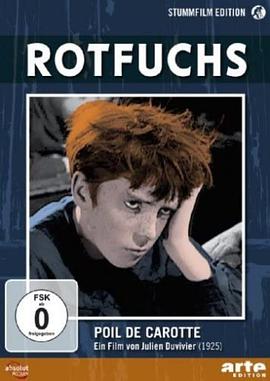
嘿,给你推荐一部快一百年前的默片《红发1925》。导演善用光影对比和景深调度,在家庭空间中构建压抑与反抗的张力。全片几乎没有夸张的情节转折,叙事节奏像乡间小路一样平缓,但镜头始终贴着人物的眼睛和手指——母亲对红发男孩的每一次冷眼、父亲沉默时微微颤抖的下巴,都靠演员细微的面部肌肉控制传递出来。 ☻。导演Duvivier那时候就特别会拍人,镜头老怼着主角的脸,没有声音全靠表情和肢体撑起情绪,比现在好多连台词都说不利索的片子强多了。剧情其实很简单——一个红发女人在小镇上被流言逼到绝路,但每场戏都像一把小刀慢慢割。
Summary
Bullied by his matriarchal mother, abused by his siblings, ignored by his father, Poil de Carotte's childhood is as miserable as it could be. An illegitimate child, he is the main reason for the enmity which exists between his parents, who continue to live together just to keep up appearances. In the end, Poil de Carotte's suffering becomes more than he can bear...
Review
Drawing heavily on the poignant novel by Jules Renard on which it is based, Poil de carotte is a modest yet appealing film which has stood the test of time mainly because of the quality of its acting performances and its inherent humanity. It is more memorable than Julien Duvivier's earlier silent version of 1925, also named Poil de Carotte.
The part of Poil de Carotte was played by 11 year old Robert Lynen, who was alleged to have been discovered whilst walking down the Champs-Elysées in Paris. Lynen is totally captivating and the film made him an instant star, launching what looked like becoming a very promising film career – until he was shot dead whilst fighting against the Germans in 1944. Harry Baur, a legendary stage and film actor (who also died during World War II, allegedly at the hands of the Gestapo), also turns in a typically fine performance. The reconciliation between father and son at the end of the film provides its most enduring image, enough to melt the heart of all but the most stoical of spectators.
相关搜索:
风起19241932鄂豫皖苏维埃银元风起19241925蒙古系列银币满酱红1935