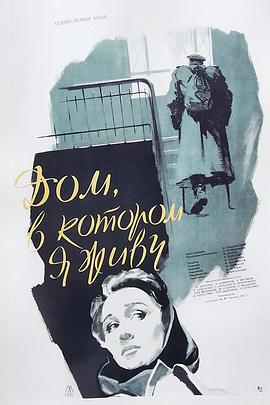
如果你正在犹豫要不要看,我可以告诉你:这是一部不靠宏大战争场面,而是靠一栋莫斯科老楼里几户人家的日常来折射战争创伤的电影。适合偏爱苏联现实主义美学、对非线性家庭史诗有耐心的影迷,尤其是想透过微观家庭史理解战后集体心理的观众。整部电影的节奏特别舒缓,像老胶片在慢慢转。没有大场面,没有英雄口号,就是讲莫斯科一栋老楼里几户人家在战争年代的日子。 ❤。
❤。 别看黑白的,后劲特别大。
They do not show war in this film, they show people and their dreams and hopes ruined by the war. It is not just another "war film", but it rises to the level of a true Tragedy. Not a propagandist or a sob story. Many critics compare this film to another famous Russian war drama, The Cranes Are Flying. I still think that The House I Live in is better, though, if you've seen The Cranes and liked it, most probably you'll love this one either. Both films were shot in 1957 and treat the war theme from the similar humane perspective. I wouldn't cut a single shot from the film, all of them are just in place. I do not know if it can be found outside Russia, if yes, don't miss it.
Many critics pointed out resemblances between Dom, V Kotorom Ya Zhivu (The House I Live In) and the better-known Soviet film The Cranes are Flying. Set in the years prior to and during WWII, the story centers on the various residents of a co-op house. Though the directors never show the war itself, its tragic impact is felt throughout the film. And despite the potential for Soviet propaganda, what sticks in the mind is the universality of the experiences endured by the leading characters. Dom, V Kotorom Ya Zhivu was one of Russian's entries in the 1958 Brussels Film Festival.
相关搜索:
六十年代的房子七零年代的房子七零年代的房子1950年的房子50年代农村老房子