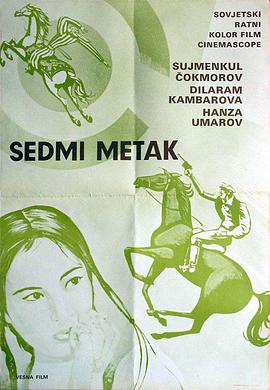
《第七颗子弹》以“子弹计数”作为叙事锚点,前六颗子弹的闪回并非线性铺陈,而是通过碎片化记忆拼凑出主角的罪疚与救赎。影片没有宏大的爆炸场面,反而把镜头长时间对准吉尔吉斯草原的荒芜与苏军指挥官的疲惫——那种尘土飞扬、角色在篝火旁沉默的场景,反而比枪战更让人记住战争的荒凉。最出彩的是结尾反转:当所有人都以为弹夹里只剩六颗子弹时,第七颗被留给了自己——这不是英雄主义,而是对投降与赴死之间灰色地带的冷静凝视。你要是喜欢《荒野大镖客》那种调调,或者想看点不一样的战争故事,这部绝对合你胃口——对了,千万别错过片尾那场沙丘上的对峙,真绝了!。这片子特别适合喜欢老派硬汉电影的朋友,或者对苏联电影、中亚历史感兴趣的人。整部片子更像一部披着战争外衣的西部心理剧,节奏缓慢但每帧都在积累张力。
The Seventh Bullet is a Soviet Ostern film of 1972 directed by Ali Khamraev. In the same tradition as The White Sun of the Desert and The Bodyguard, The Seventh Bullet is set after the Russian Civil War which ended in the 1920s when Soviet power established itself in Central Asia in the wake of the Basmachi rebellion. Despite this slight shift in emphasis and a post-war setting, The Seventh Bullet is closer to a typical war film than other Red Westerns because of a prominence of tactical resourcefulness in the development of the plot. Although of course this is a staple of many American Westerns from John Ford's cavalry series to the many Apache war films.
Despite the restoration of Soviet power in the area, Basmachis continue to arrive from across the border, bringing death and destruction to peaceful villages. One of the bands of rebels is led by Khairulla who is pitted against the militsiya (local militia) leader Maxumov. At first it seems hopeless for Maxumov as the rebels capture most of his men, winning them over to his side. He has only one strategy left; to give himself up, and try to explain to the people that Khairulla has deceived them, turning the soldiers back to revolution. Later in pursuit of his enemy, he chases Khairulla across a river. He has only one bullet left—the seventh, and he must not miss his target!
相关搜索:
世界上最强子弹特种子弹第一颗子弹7.2mm子弹十三颗子弹